
The Eight Trillion Dollar Myth
Money market funds hold a record $8.44 trillion and the reverse repo facility has drained to zero. The cash is not dry powder waiting to buy stocks. It is the plumbing of the bill market.
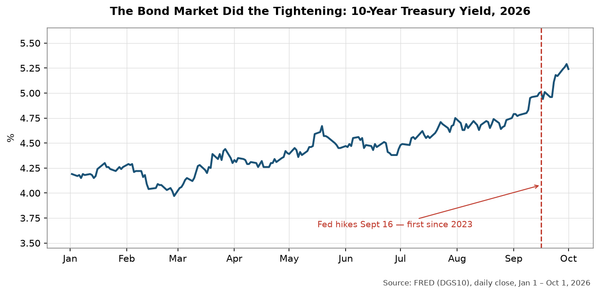
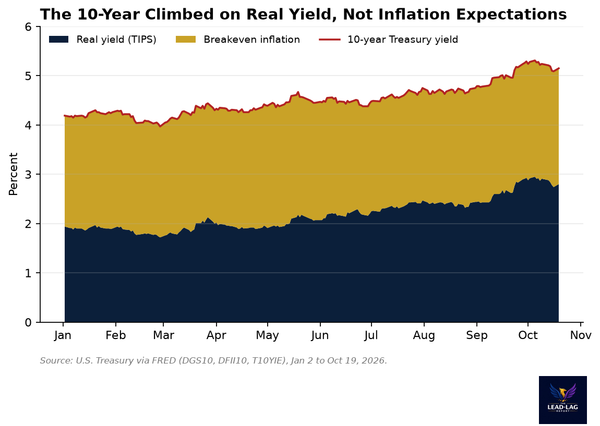
The one-year Treasury yields 62 basis points above the fed funds midpoint, and everything from two to ten years sits near five percent. The market is pricing a return to where the cycle began.
Nuveen's NMZ pays an 8.5% tax-free monthly check from investment income, using 41% leverage and a 17-year duration. The income is clean; the structure is the risk.
BlackRock's HYT pays $0.0779 monthly, an 11.7% yield at its widest discount in a year. But about a quarter of the check is return of capital.
FS KKR's new variable distribution annualizes to 15.6% at a 38% discount to NAV. The catch: the NAV itself has fallen 25% in ten quarters.
OBDC's 22% discount to NAV is either the market's verdict on private credit, or a gift. It is probably some of both.
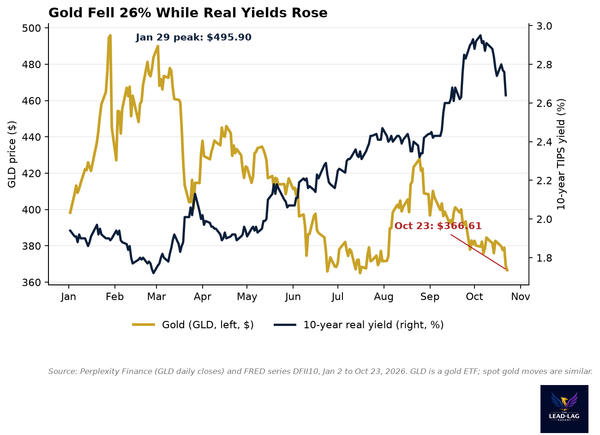
The Fed delivered its first hike in three years and the 10-year brushed 5%, the BoJ went to its highest rate since 1995 and the yen kept sliding, and copper ignored all of it, climbing back within 1.1% of its record while gold snapped its losing streak.
Treasury Rotation flips defensive, the lumber-gold gap blows out to nineteen points, and both remaining offensive readings lose conviction. The composite tilts risk-off at -18.
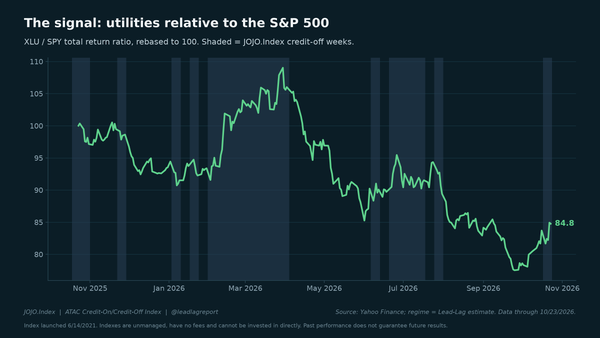
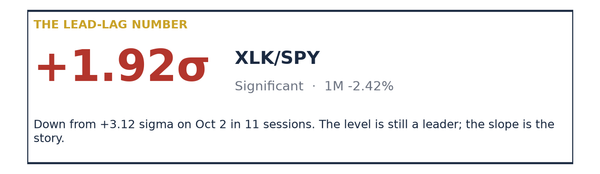
XLK/SPY at +2.65 sigma, XLU/SPY at -3.01 in Week 6 of the deeply broken framework, credit confirms risk appetite as the Fed hikes into tech strength
How TSYX applies a ~1.3x daily wrapper to the same S&P 500 0DTE covered call engine as TSPY, designed with weekly distributions into a divided-Fed environment.
Unemployment fell to 4.1 percent while participation fell beside it. A rate that improves as workers exit is not the health it looks like.
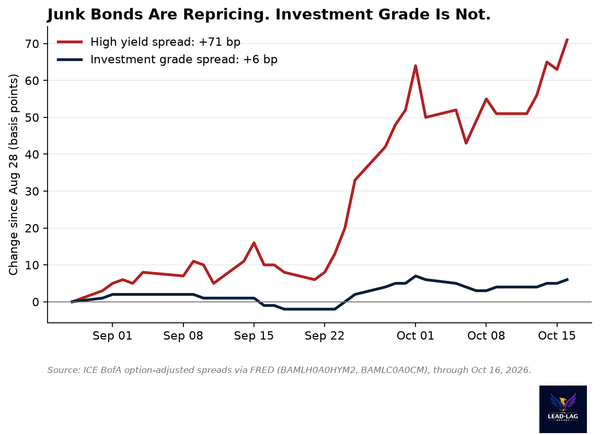
High yield OAS at 2.70 is historically tight. Tight spreads have led equity trouble more often than they have guaranteed safety.